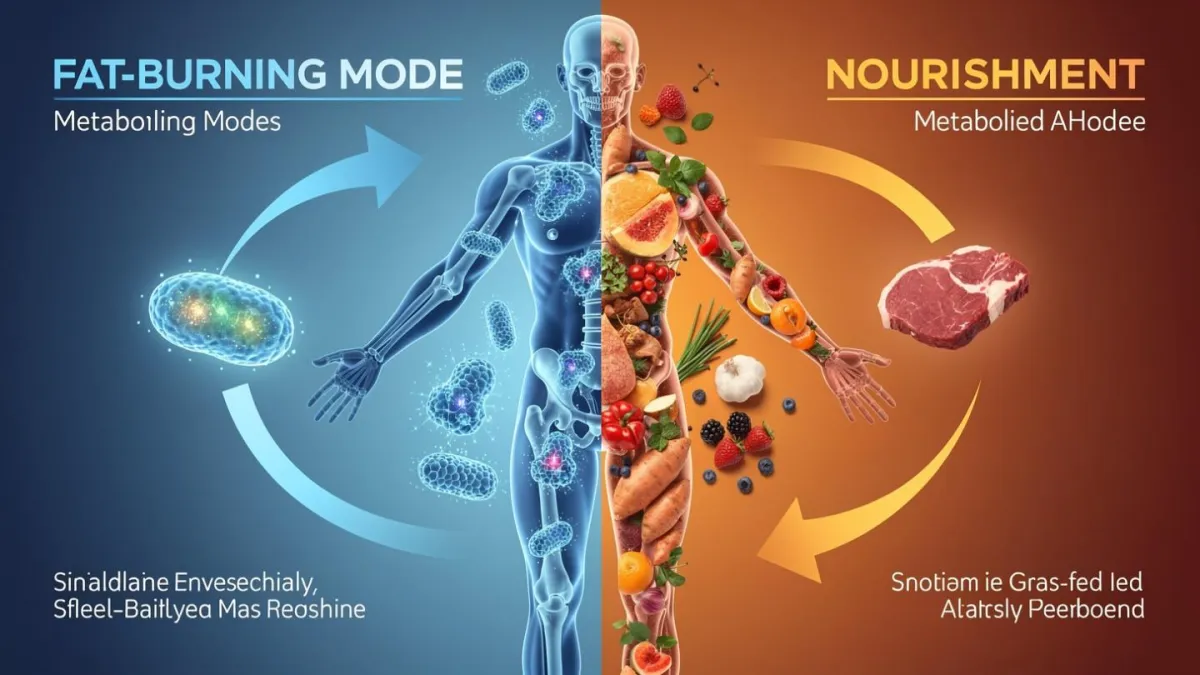
Diet Variation for Weight Loss: Break Plateaus and Boost Fat Burning Naturally
If you’ve been eating clean, exercising consistently, and still can’t lose weight, you’re not alone.
Weight loss resistance is one of the most frustrating challenges people face. But the issue isn’t always discipline—it’s often adaptation.
Your body is designed to adapt for survival. And when it adapts too well, fat loss can come to a halt.
This is where diet variation becomes a powerful solution.
What Is Diet Variation?
Diet variation is the strategic cycling between different eating styles to trigger metabolic and hormonal adaptation.
Instead of staying on one diet long-term, you rotate between:
Low-carb or ketogenic phases
Higher-carb healing phases
Periods of fasting
This creates a powerful shift in the body that reactivates fat burning.
Why Weight Loss Resistance Happens
Your body’s primary goal is survival.
When you stay in one eating pattern too long—especially low calorie or low carb—it adapts by:
Slowing metabolism
Holding onto fat stores
Disrupting hormone signaling
This is why you can eat less and exercise more… and still not lose weight.
The Role of Hormones in Fat Loss
Weight loss is not just about calories—it’s about hormones.
Key hormones involved include:
Insulin
Leptin
Thyroid hormones
When these hormones are disrupted, your body cannot efficiently burn fat.
This often happens when:
Cells are inflamed
Toxins interfere with signaling
Diet patterns remain unchanged for too long
The Power of Becoming a Fat Burner
Your body can use two primary fuel sources:
Glucose (sugar)
Fat (ketones)
Most people are stuck in sugar-burning mode due to constant carbohydrate intake.
This leads to:
Blood sugar spikes
Increased inflammation
Fat storage
When you shift into fat burning, your body begins to use stored fat for energy.
This is a key goal of diet variation.
Why Staying in Keto Too Long Can Backfire
The ketogenic diet can be powerful—but it’s not meant to be permanent for everyone.
Over time, staying in ketosis too long can:
Slow fat loss
Increase stress hormones
Reduce metabolic flexibility
Your body adapts and becomes efficient at conserving energy.
This is where many people get stuck.
The Breakthrough: Cycling Between Diets
The real power comes from switching between phases.
For example:
Follow a ketogenic diet for a period
Transition to a higher-carb cellular healing phase
Return to keto again
This cycle forces your body to adapt repeatedly—reigniting fat loss.
Why This Strategy Works
Diet variation works because it:
Prevents metabolic stagnation
Resets hormone sensitivity
Improves insulin response
Enhances fat-burning efficiency
Each phase serves a purpose.
The 5-1-1 Strategy for Faster Results
One powerful method of diet variation is the 5-1-1 approach.
How It Works:
5 days: Low-carb ketogenic diet
1 day: Fasting (or intermittent fasting)
1 day: High-carb or protein refeed
This creates a weekly cycle of adaptation.
Why It’s Effective
The fasting day improves insulin sensitivity
The refeed day signals safety to the body
The keto days promote fat burning
Together, they create a powerful hormonal reset.
The Role of Feast Days
Feast days are not “cheat days.”
They serve a strategic purpose.
They:
Boost leptin (fat-burning hormone)
Prevent metabolic slowdown
Signal abundance to the body
This tells your body it’s safe to release stored fat.
The Role of Fasting
Fasting activates deep healing processes.
It supports:
Cellular repair
Reduced inflammation
Improved insulin sensitivity
Increased growth hormone
Fasting is one of the most powerful tools for resetting the body.
Why Variation Mirrors Ancestral Health
Your body was designed for variation.
Historically, humans experienced:
Periods of abundance
Periods of scarcity
This natural cycle kept metabolism flexible and efficient.
Modern life has removed this variation—leading to imbalance.
Signs You Need Diet Variation
You may benefit from this approach if you:
Cannot lose weight despite effort
Feel stuck on a specific diet
Experience fatigue or hormone imbalance
Have stubborn fat that won’t budge
These are signs your body has adapted.
Common Mistakes to Avoid
Staying in one diet too long
Over-restricting calories
Ignoring refeed days
Choosing poor-quality foods
Balance and strategy are key.
Beyond Diet: Stress and Adaptation
Diet variation is just one form of adaptation.
Your body also responds to:
Exercise variation
Temperature changes
Stress and recovery cycles
For example, high-intensity interval training followed by rest mimics this same principle.
What to Expect When You Start
As your body adapts, you may notice:
Renewed fat loss
Increased energy
Better mental clarity
Reduced cravings
These are signs your metabolism is becoming flexible again.
The Bigger Picture: Cellular Healing
Diet variation supports healing at the cellular level.
It helps:
Reduce inflammation
Improve mitochondrial function
Restore hormone signaling
This is where lasting health begins.
Final Thoughts: The Key Is Adaptation
If you’ve been asking, “Why isn’t my diet working?”
The answer may be simple:
👉 Your body has adapted.
The solution isn’t doing more—it’s doing something different.
Diet variation introduces the change your body needs to reset, heal, and begin burning fat again.
Because true health isn’t about sticking to one path.
It’s about knowing when to shift.