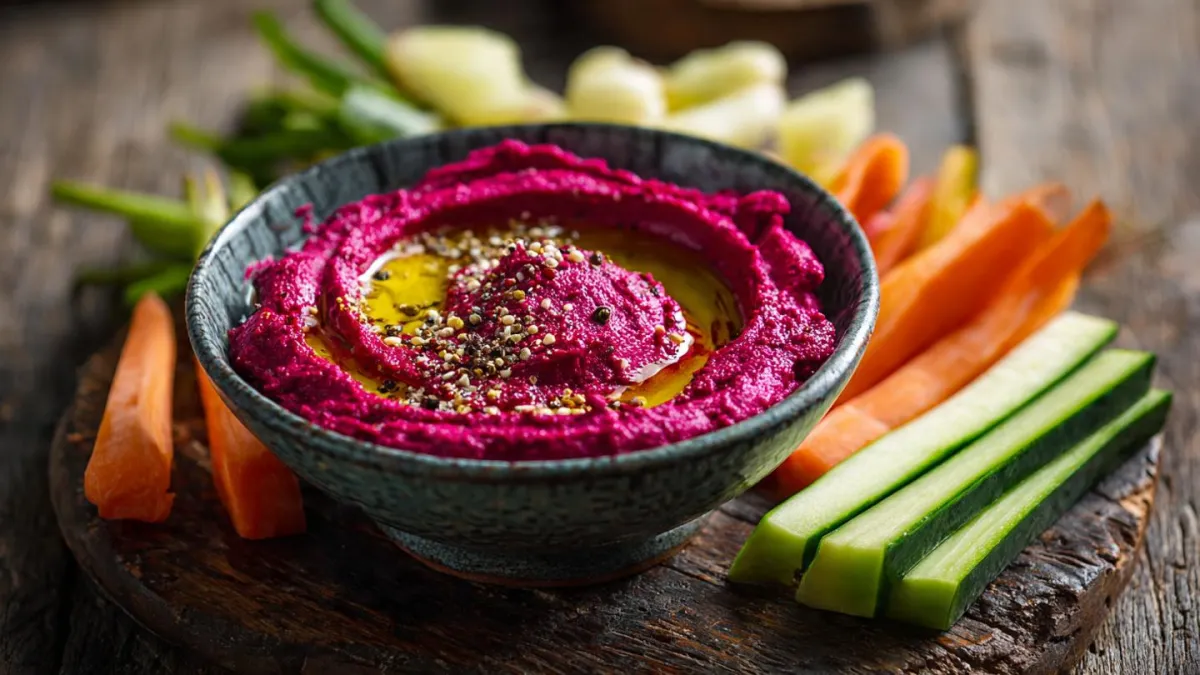
Legume-Free Beet Hummus Recipe for Gut Health & Detox Support
Your body was designed to heal—and the foods you choose can either support that healing or slow it down.
This legume-free beet hummus recipe is more than just a colorful dip. It’s a nutrient-dense, gut-supportive, and detox-friendly alternative to traditional hummus that aligns with a root-cause approach to health.
If you’ve been working on healing your gut, reducing inflammation, or supporting detox pathways, removing legumes can be a powerful step. This recipe gives you the creamy, satisfying texture of hummus—without the ingredients that may be holding your healing back.
Let’s explore why this recipe works at the cellular level and how to make it.
Why Choose a Legume-Free Beet Hummus?
Traditional hummus is made from chickpeas. While nutritious for some, legumes can be difficult to digest—especially if your gut is compromised.
A legume-free beet hummus recipe removes that burden while still delivering flavor, texture, and nourishment.
Benefits of Going Legume-Free
Reduces digestive stress
Supports gut repair and healing
Minimizes bloating and inflammation
Aligns with elimination or detox protocols
This approach focuses on giving your body what it needs—while removing what it doesn’t.
The Cellular Healing Power of Beets
Beets are one of the most powerful foods you can include in a detox-supportive diet.
They work at the cellular level to support your body’s natural detox pathways, especially the liver.
Key Benefits of Beets
Support Phase 2 liver detoxification
Promote healthy blood flow and oxygenation
Provide antioxidants that reduce oxidative stress
Help the body eliminate toxins more efficiently
Their deep red color is a sign of powerful phytonutrients that support cellular repair and regeneration.
When combined with healthy fats and minerals, beets become even more effective in supporting healing.
Why Cashews Make the Perfect Base
In this legume-free beet hummus recipe, cashews replace chickpeas to create that creamy, satisfying texture.
Cashews are easier to digest when soaked and provide important nutrients that support cellular function.
Benefits of Soaked Cashews
Provide healthy fats for brain and cell membrane health
Offer magnesium for nervous system regulation
Create a smooth, creamy texture without irritation
Soaking them reduces anti-nutrients and makes them more bioavailable—meaning your body can actually use what you’re eating.
Ingredients for Legume-Free Beet Hummus
This recipe uses simple, whole-food ingredients that work together to support gut health and detoxification.
What You’ll Need
1/2 cup raw cashews, rinsed and drained
3 medium raw beets
1/3 cup lemon juice
1/4 cup extra virgin olive oil (plus more for drizzling)
2 tablespoons tahini
1 1/2 teaspoons sea salt
1 medium garlic clove, minced
Freshly cracked black pepper
Each ingredient plays a role in supporting your body’s natural healing processes.
Step-by-Step Instructions
1. Prepare the Beets
Preheat your oven to 400°F with the rack in the middle.
Wash and trim the beets so the stems are about 1/2 inch and the roots about 2 inches or less.
Place the beets in a single layer in a baking dish. Add about one inch of water.
Cover with a heat-safe lid and roast for about 60 minutes. Check at 45 minutes, but roasting may take up to 75 minutes.
The beets are done when they can be easily pierced with a knife.
2. Cool and Peel
Allow the beets to cool.
Once cooled, slice off the tops and bottoms and gently peel away the skins.
3. Soak the Cashews
While the beets are roasting, place the cashews in a bowl.
Pour boiling water over them and let them sit for 10–20 minutes.
Drain and rinse thoroughly.
This step is key for improving digestion and creating a smooth texture.
4. Blend the Ingredients
Add the following to a food processor:
Roasted, peeled beets
Soaked cashews
Lemon juice
Olive oil
Tahini
Sea salt
Minced garlic
Freshly cracked pepper
Pulse a few times to combine.
Scrape down the sides as needed.
Then blend until you reach a smooth, creamy consistency.
5. Adjust and Serve
Taste and adjust seasoning as needed:
Add more salt for flavor
Add more lemon juice for brightness
Add pepper for depth
Drizzle with extra virgin olive oil before serving.
How This Recipe Supports Detoxification
This legume-free beet hummus recipe is designed to support your body’s detox pathways without overwhelming it.
Detox-Supportive Ingredients
Beets: Support liver detox and blood flow
Lemon juice: Stimulates digestion and bile flow
Olive oil: Supports healthy bile production
Garlic: Encourages natural detox enzyme activity
Together, these ingredients help your body eliminate toxins more efficiently—without harsh interventions.
Supporting Gut Health with Every Bite
Healing begins in the gut.
This recipe avoids common irritants while providing nutrients that help rebuild and support the gut lining.
Gut-Healing Benefits
Easy-to-digest ingredients
No legumes or common inflammatory triggers
Healthy fats to support the intestinal lining
Minerals that support nervous system regulation
When your gut is supported, everything else improves—from energy to hormone balance.
When to Use This Recipe
This legume-free beet hummus recipe is ideal for:
Detox protocols
Gut healing phases
Elimination diets
Anti-inflammatory nutrition plans
It’s a simple way to stay aligned with your healing goals—without sacrificing flavor.
Serving Ideas
Keep it simple and nourishing.
Pair With:
Fresh vegetable sticks (carrots, celery, cucumber)
Grain-free crackers
As a spread for wraps or bowls
Alongside clean protein for balanced meals
This makes it easy to incorporate into your daily routine.
Final Thoughts
Healing doesn’t have to be complicated.
Sometimes, it starts with small shifts—like replacing a traditional food with a more supportive option.
This legume-free beet hummus recipe is a perfect example of how simple ingredients can work together to support your body at the cellular level.
Your body knows how to heal. When you remove interference and provide the right support, that healing begins naturally.
Start with what you eat—and let your cells do the rest.