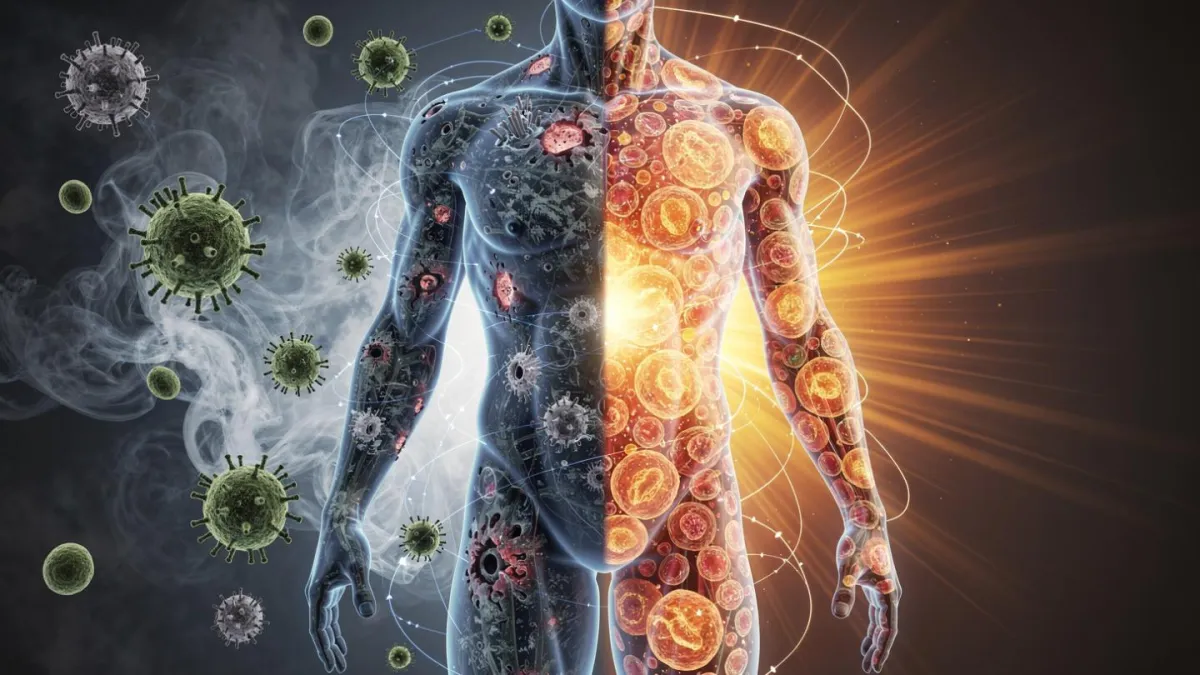
Exposure and Cellular Health: How Hidden Toxins Impact Your Body
We live in a world filled with toxins.
Most of them are invisible.
And many of them are silently impacting your health every single day.
From chemicals in your food to pollutants in your environment, your body is constantly exposed to substances that can disrupt normal function—especially at the cellular level.
The Reality of Modern Toxic Exposure
On a daily basis, you may be exposed to thousands of chemicals.
These include:
Pesticides and herbicides in food
Chemicals in household products
Mold and environmental toxins
EMFs from technology
Heavy metals in water and air
Even if you’re doing “everything right,” these exposures can still affect your health.
How Toxins Affect the Body
Toxins don’t just sit in your body—they interfere with how your body functions.
At the cellular level, toxins can:
Damage cell membranes
Disrupt energy production
Increase inflammation
Block detox pathways
When this happens, your body begins to lose its ability to regulate and heal.
The Cellular Burden: When Exposure Becomes Overload
Your body can handle some level of toxins.
But when exposure exceeds your detox capacity:
👉 A toxic burden builds
This can lead to:
Chronic inflammation
Hormonal imbalance
Immune dysfunction
Neurological symptoms
And over time, this burden can become overwhelming.
Real-World Toxic Exposure Is Everywhere
Many people assume toxic exposure only happens in extreme situations.
But real-world examples show otherwise.
Communities across the country have faced:
Contaminated water supplies
Airborne chemical exposure
Industrial pollution
Even individuals with no known exposure have been found to carry dozens of harmful chemicals in their bodies.
The Impact on Key Systems in the Body
Toxins affect multiple systems at once.
1. Nervous System
Brain fog
Memory issues
Mood changes
2. Hormonal System
Thyroid dysfunction
Adrenal stress
Hormone imbalance
3. Immune System
Increased susceptibility to illness
Autoimmune conditions
4. Digestive System
Leaky gut
Poor nutrient absorption
Inflammation
Why Symptoms Are Often Misunderstood
Many people experience symptoms like:
Fatigue
Headaches
Skin issues
Digestive problems
But these symptoms are often treated individually.
The root cause—toxic overload—is frequently overlooked.
The First Step: Remove the Source
Healing begins with one critical step:
👉 Remove the source of toxins
This includes:
Improving food quality
Reducing environmental exposure
Addressing mold or chemical sources
You cannot detox effectively if exposure continues.
Supporting Detox Pathways
Your body detoxifies through:
Liver
Kidneys
Gut
Lymphatic system
These pathways must be:
Open
Supported
Functioning properly
If they are overwhelmed, toxins recirculate instead of being eliminated.
The Role of Binders in Detox
Binders help:
Capture toxins
Prevent reabsorption
Support elimination
Without proper binding, toxins can move but not leave the body.
Why Detox Must Be Done Correctly
Improper detox can:
Mobilize toxins without removing them
Increase symptoms
Cause redistribution
A structured, cellular approach is essential.
The 5R Approach to Cellular Healing
A successful detox follows a structured method:
Remove the source
Regenerate the cell membrane
Restore cellular energy
Reduce inflammation
Reestablish detox processes
This ensures safe and effective healing.
The Role of Fasting in Detox
Fasting supports detox by:
Enhancing autophagy
Reducing inflammation
Improving metabolic flexibility
It gives your body time to focus on repair instead of digestion.
Signs You May Be Toxic
You may be dealing with toxic overload if you experience:
Chronic fatigue
Brain fog
Hormone imbalance
Chemical sensitivity
Unexplained symptoms
These are often signs your body is overwhelmed.
The Bigger Picture: Healing the Cell
True healing doesn’t happen at the surface.
It happens at the cellular level.
When you:
Remove toxins
Support detox pathways
Nourish your body
You allow your cells to function properly again.
Final Thoughts: You’re Not Broken—You’re Overloaded
Many people feel like something is wrong with their body.
But often, the issue isn’t dysfunction—it’s overload.
Your body is doing its best under difficult conditions.
When you reduce that burden and support your system, healing becomes possible.
Because your body was designed to heal.
You just have to remove what’s getting in the way.